United States federal government status
Is there a U.S. government shutdown right now?
NO
No, there is no U.S. government shutdown right now. The U.S. government is open. Congress passed a stopgap funding bill that keeps federal agencies funded through December 11, 2026.
Checked automatically against OPM's official status. Last confirmed: May be out of date: confirm with the official sources.
Government: OPEN Funded through December 11, 2026 65 days until the next deadline
- Mail: delivered
- Social Security: paid
- SNAP: issued
- Military pay: on schedule
- Airports: operating
- Parks: open
Next U.S. government shutdown deadline: countdown
U.S. federal funding runs out at 11:59 PM Eastern on December 11, 2026. If Congress does not pass new funding or another stopgap bill by then, a government shutdown starts.
Time left until funding runs out
Current funding law: the Continuing Appropriations and Extensions Act, 2027, a stopgap bill signed on September 2, 2026.
Add the deadline to my calendarShutdown timer
160 days
since the last shutdown ended on April 30, 2026. It lasted 76 days. Partial: Department of Homeland Security only.
How we got here
- August 8, 2026The Senate passed a stopgap funding bill, the Continuing Appropriations and Extensions Act, 2027, by a vote of 90–6.
- September 1, 2026The House approved the bill, 370–48.
- September 2, 2026The President signed it into law (Public Law 119-103). This kept the government open past October 1, 2026, when the new budget year began.
- Next deadline, December 11, 2026Funding runs out at 11:59 PM Eastern unless Congress passes and the President signs new funding.
Am I affected by a government shutdown?
Tap a service to see how it is working right now, and what usually happens to it during a shutdown. All 9 services are working normally right now.
Mail (USPS) Normal
Right now: Mail is delivered as usual.
During a shutdown: USPS pays for itself through postage and does not rely on yearly funding from Congress, so mail keeps coming during a shutdown.
Social Security Normal
Right now: Social Security payments are going out on schedule.
During a shutdown: Social Security is mandatory spending, so monthly payments keep going out on schedule. Some office services can be slower.
SNAP / food stamps Normal
Right now: SNAP benefits are being issued normally.
During a shutdown: Benefits usually continue in a short shutdown. A long shutdown can put the next month of benefits at risk.
Military pay Normal
Right now: Military pay is on its normal schedule.
During a shutdown: Active-duty troops keep working. Their paychecks can be delayed unless Congress or the administration finds a way to pay them.
Federal workers Normal
Right now: Federal employees are working and being paid normally.
During a shutdown: Essential ("excepted") employees keep working without pay. Others are furloughed, meaning sent home without pay. Workers have received back pay after past shutdowns.
TSA & flights Normal
Right now: TSA and air traffic control are operating normally.
During a shutdown: TSA officers and air traffic controllers are essential, so they keep working, but without pay. Long shutdowns have caused staff shortages and flight delays.
National parks Normal
Right now: National parks are operating normally.
During a shutdown: Parks may close or run with few staff. In past shutdowns some parks closed, while others stayed open without visitor centers, rangers or trash pickup.
IRS & tax refunds Normal
Right now: The IRS is operating normally.
During a shutdown: The IRS scales back. Phone help and some processing can slow down or pause, so refunds may take longer.
Passports Normal
Right now: Passport offices are processing applications normally.
During a shutdown: Passport services have largely continued in past shutdowns because they are paid for by fees, but offices inside closed federal buildings may not open.
Latest U.S. government shutdown updates
The 5 latest United States government shutdown stories from major news outlets, newest first. Updated automatically; unrelated stories are filtered out.
What does a Government Shutdown Mean?
In the United States, a government shutdown happens when Congress and the President do not agree on money for federal agencies before the old funding runs out. Without that money, agencies must stop work that is not essential. Essential work keeps going, such as the military, air traffic control and law enforcement.
Full shutdown
Every agency that depends on yearly funding is affected.
Partial shutdown
Some agencies already have their money and keep running. For example, the shutdown from February to April 2026 only affected the Department of Homeland Security.
Shutdown words in plain English
- Appropriations
- The yearly laws that give federal agencies money to spend.
- Continuing resolution (CR)
- A stopgap bill that keeps agencies funded at current levels for a short time.
- Funding lapse
- The moment money runs out with no new law in place. This is what starts a shutdown.
- Furlough
- Being sent home from work without pay until the shutdown ends.
- Excepted (essential) employee
- A worker whose job protects life or property, so they keep working, usually without pay.
- Back pay
- Pay for the shutdown period, given to federal workers after funding returns.
Reasons for a U.S. government shutdown, step by step
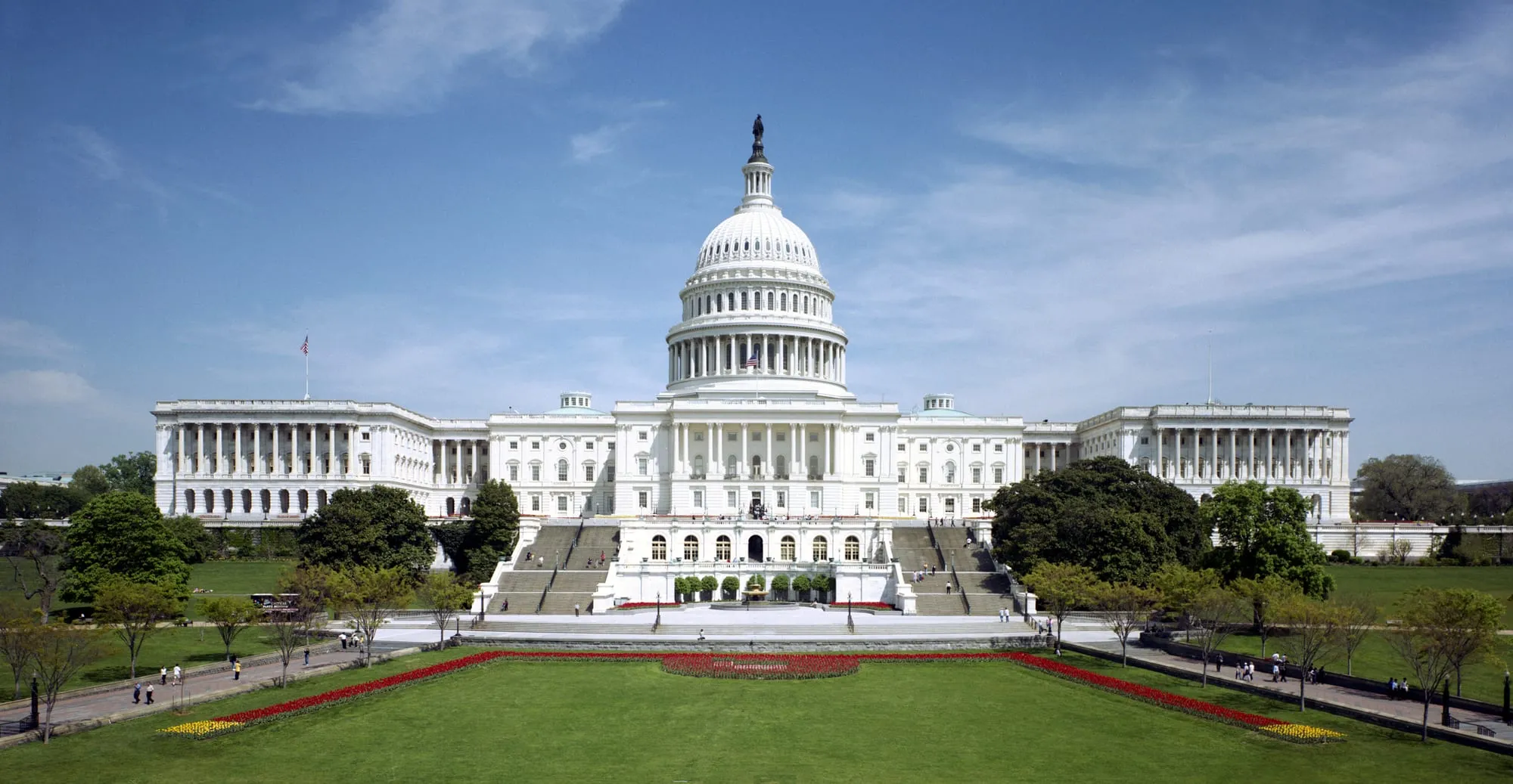
Congress has to approve the moneyEvery year, Congress must pass 12 funding bills, or a short-term stopgap bill, so federal agencies can spend money. The federal budget year starts on October 1.
The deadline passes without a new lawIf no funding law is signed before the old money runs out, there is a "funding lapse". Agencies no longer have legal permission to pay for most of their work.
The law forces work to stopA law called the Antideficiency Act bans agencies from spending money Congress has not approved. So work that is not essential stops and many employees are sent home. Work that protects life and property continues.
Why the deal doesn't happenLapses usually happen when lawmakers, or Congress and the President, cannot agree on how much to spend, what to cut, or policy demands attached to the funding bills.
Sources: U.S. Government Accountability Office, Congressional Research Service.
Recent government shutdowns in the United States
The longest full shutdown lasted 43 days, from October to November 2025. The longest of any kind lasted 76 days in 2026, but it only affected the Department of Homeland Security. See the full shutdown history.
- Full shutdown (whole government)
- Partial shutdown (some agencies)
Show as a table
| Shutdown | Dates | Type | Days |
|---|---|---|---|
| 1995–96 | Dec 16, 1995 – Jan 6, 1996 | Partial shutdown: 6 of 13 funding bills not yet passed | 21 |
| 2013 | Oct 1 – Oct 16, 2013 | Full shutdown: Whole government | 16 |
| 2018–19 | Dec 22, 2018 – Jan 25, 2019 | Partial shutdown: 7 of 12 funding bills not yet passed | 35 |
| 2025 | Oct 1 – Nov 12, 2025 | Full shutdown: Whole government: longest full shutdown | 43 |
| Jan–Feb 2026 | Jan 31 – Feb 3, 2026 | Partial shutdown: About half of departments | 4 |
| Feb–Apr 2026 | Feb 14 – Apr 30, 2026 | Partial shutdown: Homeland Security only: longest of any kind | 76 |
Frequently asked questions
Is the U.S. government shut down right now?
No, there is no U.S. government shutdown right now. The U.S. government is open. Congress passed a stopgap funding bill that keeps federal agencies funded through December 11, 2026.
When is the next funding deadline?
The next deadline is 11:59 PM Eastern on December 11, 2026, when the current funding runs out. If Congress passes new funding before then, there is no shutdown.
What does a U.S. government shutdown mean?
It means United States federal agencies have run out of approved money, so they must stop work that is not essential. Essential work such as the military, air traffic control and law enforcement continues, often without pay until the shutdown ends.
What is a partial government shutdown?
A partial shutdown is when only some agencies run out of money while others are already funded and keep working. The shutdown from February to April 2026 was partial: it only affected the Department of Homeland Security.
When was the last U.S. government shutdown?
The most recent one ran from February 14, 2026 to April 30, 2026 (76 days) and only affected the Department of Homeland Security. The last full shutdown ran from October 1, 2025 to November 12, 2025 and lasted 43 days.
More: Shutdown history
How many days has the government been shut down?
The government is not shut down right now, so the count is zero. The last shutdown ended on April 30, 2026 after 76 days.
What stays open during a shutdown?
Essential services keep running, including the military, air traffic control, TSA airport screening, law enforcement, mail delivery by USPS and Social Security payments. Work that is not essential stops or slows down.
Do federal employees get paid during a shutdown?
Not while it lasts. Essential employees keep working without pay and others are furloughed, meaning sent home without pay. After past shutdowns, federal workers received back pay once funding returned.
How we check the status
- Funding laws: we check Congress.gov for funding bills and stopgap bills that have been signed into law, and when they run out.
- Automatic monitoring: every 5 minutes, our monitor reads the official operating status published by the Office of Personnel Management (OPM). When OPM reports a lapse in funding, the answer here changes within minutes.
- A person reviews it: every automatic change is reviewed by hand, and we can override it. For example, a shutdown of a single department may not show up in OPM's status, so we watch Congress.gov and agency announcements too. Last confirmed by a person: September 29, 2026 at 3:00 AM ET.
- No guessing: we do not publish betting odds or predictions. If something is unclear, we say so.